






I tried Status Saver - Video Saver as the sort of practical social app you open when a friend’s temporary post contains something worth keeping. Its purpose is straightforward: help you save photos and videos from status updates, while also letting you view friends’ statuses without marking them as seen. That combination makes it more useful than a simple media downloader, but it also means the best experience depends on using it thoughtfully rather than treating it as an automatic archive for everything.
The app comes from Save Status, Video & Image Downloader and sits in the social category. It is free to install, carries a Teen content rating, and has built a sizeable audience, with over 100 million installs and a 4.6 average from around 273 thousand ratings. Those figures suggest that the basic workflow is easy for many people to understand. After spending time with it, I agree with that general impression, although I found that a few habits make the difference between a tidy tool and a cluttered download folder.
How the everyday workflow feels
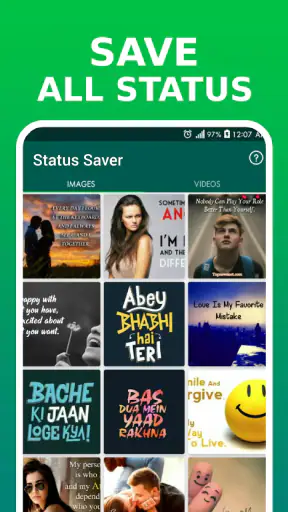
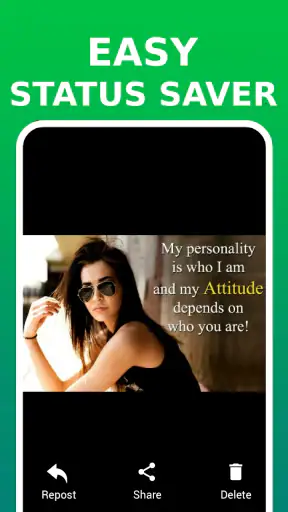
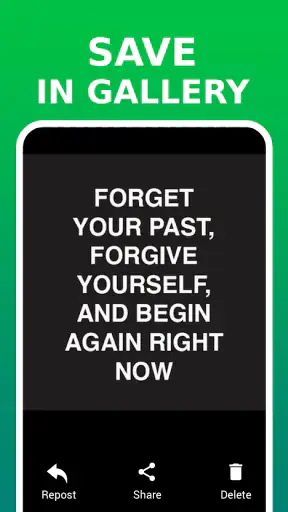
The normal routine is simple. I open the app, look through the available status content, choose the photo or video I want, and save it for later use. The appeal is not that it transforms the media; it removes the need to ask someone to send a copy of something they have already shared temporarily. For a family photo, a funny clip, an event reminder, or a useful image, that can be much quicker than taking a screenshot and then dealing with cropping or reduced quality.
The private-viewing option changes the workflow slightly. Sometimes I want to check a status without immediately signaling that I have opened it. That can be useful when I am catching up on several updates, when I am busy and do not want to start a conversation yet, or when I simply want to inspect a post before deciding whether it is relevant. I see this as a convenience feature, not a reason to ignore other people’s expectations. If a status is clearly personal, saving or sharing it without permission is still poor etiquette.
One practical point is that the app works best when I treat the status feed as a temporary inbox. I review what is available, save only the items I genuinely need, and then leave. Saving everything creates a messy gallery surprisingly quickly, especially when several contacts post short videos. The app makes collection easy, so the discipline has to come from the user.
A realistic use case: saving an event update
Imagine a friend posting a change to the meeting place for a local event. I can view the status, save the image, and refer to it later instead of repeatedly opening the messaging app. If the post includes a map screenshot or a timetable, keeping a local copy is convenient when I am traveling between locations. I might then place it in a clearly named album or send it to the people who need it, provided the original poster is comfortable with that use.
This is where the app feels more useful than a screenshot shortcut. A screenshot captures whatever is on the screen, including interface elements, while a dedicated save action is designed around the shared photo or video itself. For moving content, the difference is even more noticeable: a saved video is easier to reuse than a sequence of screenshots, and it avoids the awkward result of recording the screen manually.
There is still a small trade-off. A status may disappear or change before I get to it, and the app cannot make unavailable content available again. I have learned to save something when I know I need it, rather than assuming I can return to it hours later. That is a simple habit, but it prevents the most common disappointment with temporary posts.
What I check before saving anything
I first look at whether the content is genuinely worth keeping. This sounds obvious, but it matters because a status saver can encourage impulse downloads. A useful approach is to ask whether I will need the item outside the messaging app: perhaps it contains instructions, a reference image, a family memory, or a clip I have permission to share. If the answer is no, viewing it without saving keeps my storage and gallery cleaner.
I also pay attention to whether a post belongs to someone else. The ability to save media is technically convenient, but it does not automatically grant permission to repost it publicly. For private conversations, I use saved items as personal references. For public sharing, I prefer to ask first, especially if the image includes people, private messages, or identifiable locations.
The most useful habit is to decide what the saved file is for before downloading it. If I plan to watch it once, saving may be unnecessary. If I need it later, I save it and organize it immediately. This avoids the familiar problem of having a download folder full of anonymous clips that are impossible to identify after a few days.
Settings and routines that deserve attention
The current release is version 5.0.2, and it supports devices running Android 7.0 or later. That makes it accessible to people using older Android phones, although the quality of the experience can still depend on the phone’s storage, gallery organization, and the way the underlying messaging service exposes status media. I would check the app’s available settings on my own device before building a complicated routine around it.
Rather than changing every option immediately, I prefer to test one complete save from beginning to end. I check where the item appears, whether it opens correctly in the gallery, and whether the filename or folder arrangement makes sense for later use. This small test answers the questions that matter most in daily use: can I find the saved media, does it play normally, and will repeated downloads make my gallery difficult to manage?
If the app offers choices around how saved items are handled on a particular device, I would favor the option that keeps them easy to locate without mixing them with personal camera photos. A separate album or recognizable location is more practical than allowing every saved status to disappear among hundreds of unrelated images. I would also review the app after a system update, because Android’s handling of storage and media access can affect how saving tools behave.
The private-viewing feature deserves a deliberate check as well. I would use it for a specific reason, then confirm that the behavior matches what I expect before relying on it. Social apps can change how status views are recorded, and a user should not assume that one tool overrides every privacy or visibility rule in the service where the status originated. In my experience, treating privacy-related controls as conveniences rather than guarantees leads to fewer surprises.
Keeping saved media manageable
My preferred workflow is to save, review, and sort in one short session. If I save several items during the day, I quickly remove duplicates and decide which ones belong in a permanent album. Videos are especially worth reviewing because they take more space than still images and are often saved impulsively. A status that seemed funny for a moment may not deserve a permanent place on the phone.
I also avoid using the app as a replacement for a proper backup system. A saved status is a local copy, not automatically a carefully labeled archive. For anything important, I would move it into the phone’s normal photo organization or another backup routine I already trust. This distinction is easy to miss because the act of saving feels final, but finding a file later is just as important as downloading it in the first place.
Another useful check is whether I am saving the same item more than once. Repeatedly opening a status and tapping save can produce unnecessary duplicates, depending on how the device and app handle existing files. Before saving again, I look in the destination album. That takes only a moment and keeps the collection cleaner over time.
Faster patterns for people who use it often
Once the basic process is familiar, speed comes from reducing decisions rather than rushing through taps. I usually review statuses in batches: first the people whose updates I expect to matter, then the rest. I save only the items that meet my purpose, and I handle organization immediately afterward. This is faster than downloading everything and sorting it much later.
A second pattern is to separate “temporary reference” from “keep permanently.” For example, I might save a timetable so I can consult it during the day, but I would not necessarily place it in a long-term album. Conversely, a family photo or a video I have permission to reuse deserves a clear destination. This two-step mindset prevents the download action from becoming a commitment to keep every file forever.
For people who frequently receive useful visual information through statuses, the app can become a small reference tool. A restaurant menu, a product image, a craft instruction, or a travel detail may be easier to consult from the gallery than by searching through a busy conversation. The important part is naming or grouping the material afterward. Without that step, the advantage over simply reopening the status becomes much smaller.
I would also use the app selectively when traveling or dealing with an unreliable connection. If a friend posts directions or a meeting detail, saving it while it is visible can make it available when reopening the original status is inconvenient. I would not assume that every saved item will remain perfect across devices or apps, so I check important information before relying on it. For critical travel details, I still prefer a proper note or official source.
When the usual alternatives are better
The standard screenshot tool is better when I need to capture a conversation, a screen layout, or a status that the app does not present as a downloadable image or video. It is also available immediately and does not require another app. Its weaknesses are familiar: screenshots may include interface elements, video becomes a static image, and repeated captures can be awkward.
Screen recording is a reasonable fallback for moving content when a normal save action is not suitable, but it usually creates extra editing work and may capture notifications or other private information. I prefer the dedicated workflow here because it is more focused. A general file manager, meanwhile, is better for organizing media after saving, not for discovering status content in the first place.
Cloud photo services are stronger for long-term preservation, searching, and access across devices. They are not really substitutes for the status-viewing part of this app, but they are better once a saved photo or video becomes important. My practical combination is to use this app for the initial capture, the gallery for quick sorting, and a trusted backup method for files I truly want to retain.
Advanced limits and points of friction
The biggest limitation is that convenience can blur the line between viewing and collecting. The app makes it easy to save someone else’s media, but it cannot tell me whether that person intended the content to be downloaded or redistributed. I consider this a social limitation rather than a missing technical feature. The responsible workflow is to keep personal content private and ask before reposting.
Another limitation is dependence on the surrounding messaging environment. Status media may be unavailable, expire, or behave differently after an update to the service that hosts it. The saver can only work with content that is actually accessible to it. That means I would not use it as the sole method for preserving important information or irreplaceable memories.
The free price is a strong reason to try it, but the app also lists in-app purchases of nine dollars per item. I would examine what an offered purchase changes before paying, rather than assuming that every extra option is necessary. For occasional saving, the free experience may be enough. Someone who uses the tool heavily should judge whether the added convenience justifies the cost and whether it solves a real problem in their routine.
The Teen rating is another reminder that this is a social utility, not a protected private vault. Saved media can include content from other people, and the user remains responsible for what is viewed, stored, or shared. I would be particularly careful on a shared phone, where saved images may appear in the gallery for other users to see.
Storage is a practical concern too. A few still images rarely cause trouble, but repeated video downloads can accumulate unnoticed. I recommend checking the saved collection periodically and deleting clips that were only needed briefly. If the phone is already low on space, a screenshot or simply bookmarking the original conversation may be preferable to creating another local copy.
Who should use it, and who should skip it
I think it is a good match for someone who regularly receives useful or memorable photos and videos through status updates and wants a quicker way to keep them. It is especially handy for people who dislike screen recording, want a cleaner result than a screenshot, or sometimes need to browse updates without immediately marking them as seen.
I would skip it if I rarely save status media, already have a simple workflow that meets my needs, or feel uncomfortable with an extra app handling social content. The built-in screenshot and recording tools are sufficient for occasional use. I would also avoid relying on it if my main goal is a secure, searchable media archive; a dedicated photo-management or backup solution is a better fit for that job.
For privacy-conscious users, the decision is more nuanced. The private-viewing function may be useful, but I would still read the app’s current permissions and privacy choices on the device before installing. I would not give the app more access than its workflow requires, and I would avoid saving sensitive content simply because it is technically possible.
My verdict after building a repeatable routine
Status Saver - Video Saver is at its best when used as a focused bridge between temporary social posts and carefully chosen local copies. I like the direct saving workflow, the ability to view statuses without immediately showing that I have seen them, and the fact that the app is free to start. Its broad adoption and 4.6 average rating from around 273 thousand ratings also make it a credible option rather than an obscure experiment.
My recommendation comes with a clear condition: use it selectively. Save media with a purpose, check where files go, sort them before they pile up, and ask before sharing someone else’s content. Those habits reveal the app’s real strength. It is not a replacement for screenshots in every situation, not a guaranteed archive for disappearing posts, and not a substitute for cloud backup. It is a practical social utility for a narrow but common task.
After testing the basic workflow and the faster patterns, I would keep it installed if status media is a regular part of my conversations. I would not recommend it to someone who only needs an occasional screenshot or who wants advanced photo organization. For the right user, though, the combination of status saving and discreet viewing is genuinely convenient, and a little organization turns it from a clutter generator into a useful everyday tool.


